

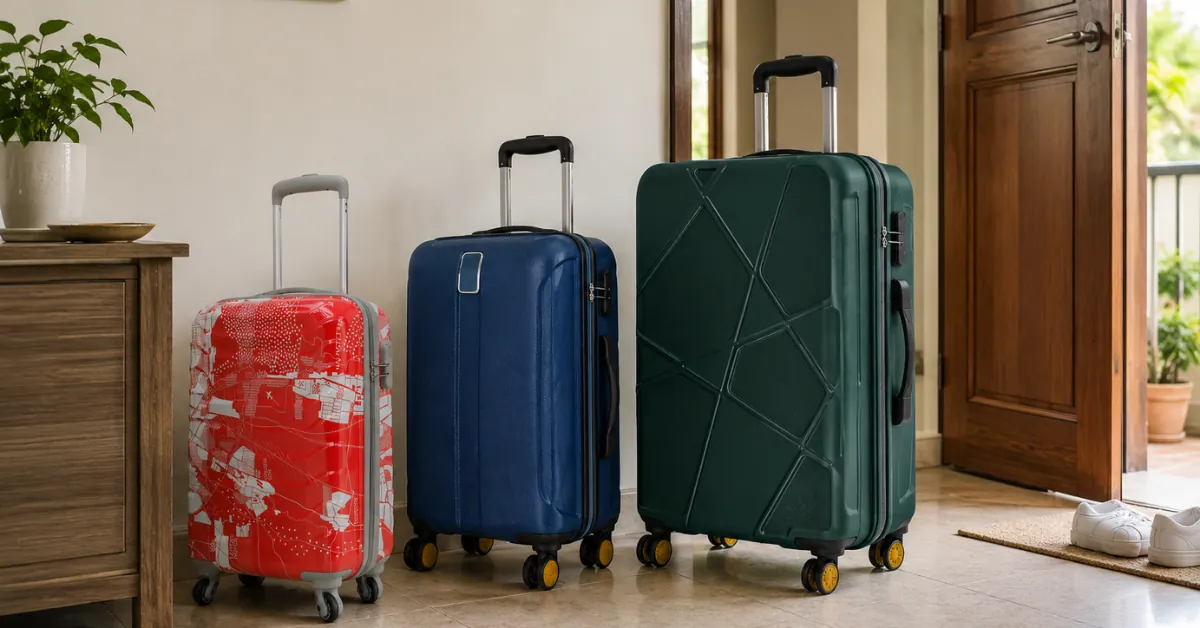
You’re on a shopping page. It shows three sizes: 55cm, 65cm, 75cm. These numbers don’t mean much on their own, because you don’t pack in centimetres. You pack in days, in outfits, in whether the bag will fit under your train seat.
One thing worth knowing before we go further: size is a starting point, not a guarantee. Two 65cm suitcases can have different width, depth, and internal layout, so the same size label doesn’t always mean the same packing space. Keep that in mind as you read.
Quick answer
- 55cm — short trips, travelling alone, often usable as cabin baggage on flights (check your airline first)
- 65cm — a practical middle ground for most general trips, usually checked in
- 75cm — long trips, moving, or packing for a family, always checked in
Trolley Bag Size Guide comparison
| Size | Also sold as | Typical trip length | Flight use | Best for |
|---|---|---|---|---|
| 55cm | ~20–22 inch | 2–4 days | Often cabin-size, but confirm with your airline | Solo, short trips |
| 65cm | ~24–26 inch | 5–10 days | Usually checked in | Most general travel |
| 75cm | ~28–30 inch | 10–14+ days | Always checked in | Long trips, family travel |
These are practical ranges based on common products in each size category, not fixed capacity rules. Actual packing space depends on the specific suitcase’s dimensions and design, not the size label alone.
If you want to check everything else about a trolley bag apart from size, have a look at our Trolley Bag Buying Guide — it covers weight, material, wheels, and warranty as well.
What do 55cm, 65cm and 75cm actually mean?
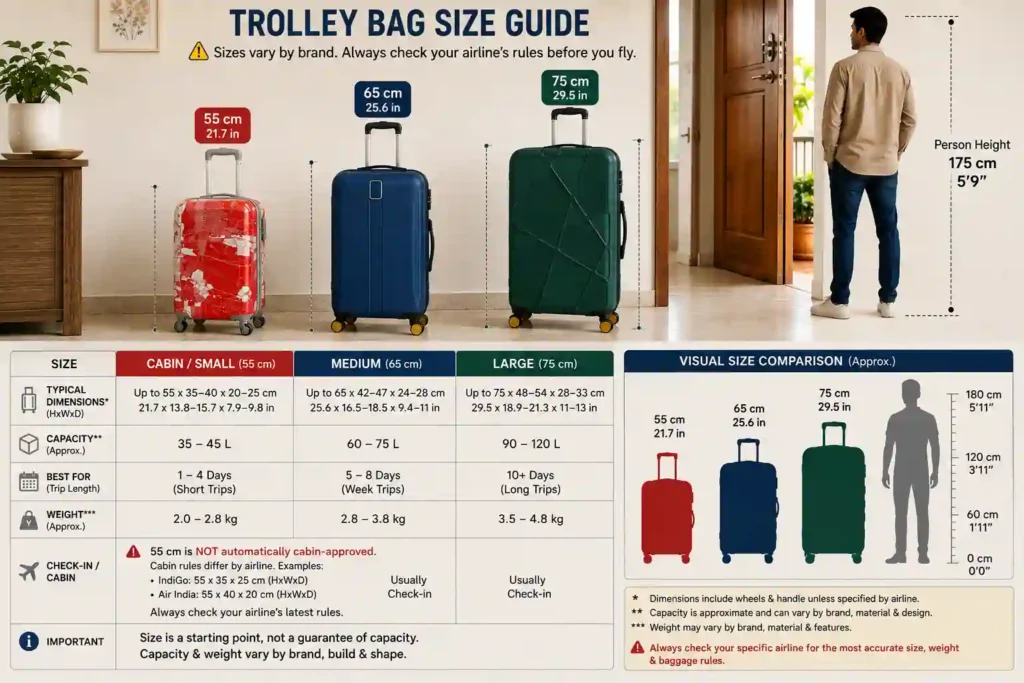
These numbers usually refer to the suitcase’s height, sometimes including the wheels and handle housing, sometimes not — this varies by brand, which is part of why two “55cm” bags can feel different in hand.
In inches, the rough conversion is:
- 55cm ≈ 21.7 inches, commonly sold as 20-inch or 22-inch
- 65cm ≈ 25.6 inches, commonly sold as 24-inch or 26-inch
- 75cm ≈ 29.5 inches, commonly sold as 28-inch or 30-inch
Is a 22-inch bag the same as 55cm? Roughly, but not exactly. Manufacturers measure differently — some include wheels and handles in the stated size, some don’t. If a specific size matters for your airline’s cabin baggage rule, check the suitcase’s exact listed dimensions rather than assuming a labelled “22-inch” bag is precisely 55cm.
Does the size in cm tell you how much the bag holds? Not reliably. Dimensions (height × width × depth) tell you more than the single size number, and litres are the better unit for comparing actual packing space between two bags. If a listing gives both the size label and a litre capacity, use the litre figure to compare across brands.
55cm — for short trips, travelling alone
This is the smallest common size. Bags in this category typically fall somewhere in the 35–45 litre range, though this varies by design — enough for two or three days of clothes and basics for most people.
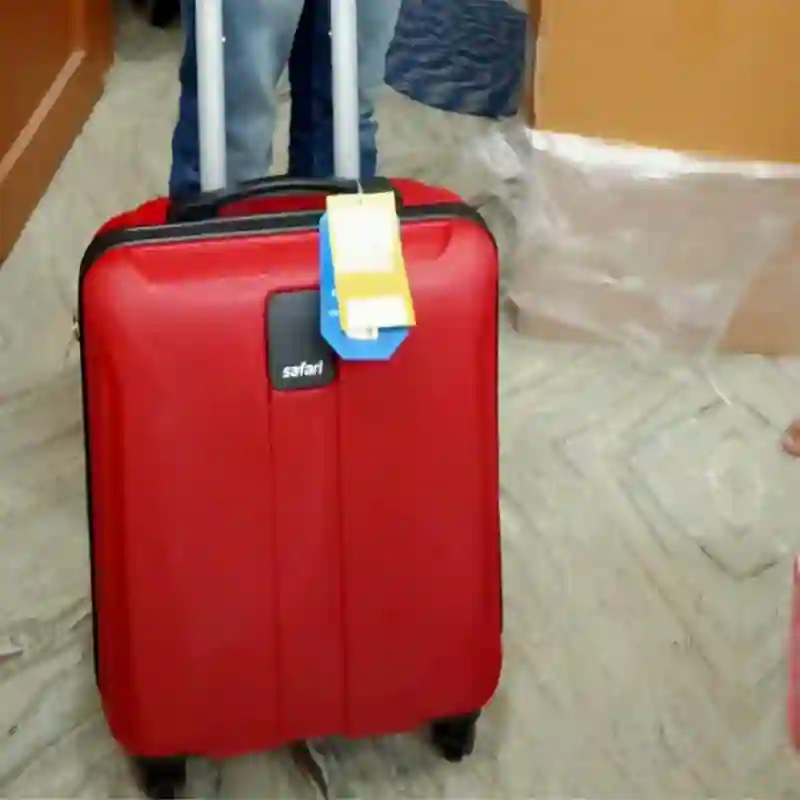
What makes this size useful isn’t the size itself. It’s that you can keep it with you the whole time instead of handing it over or waiting for it. It’s the size most people can lift onto a train’s overhead luggage rack without help.
If you fly sometimes: a 55cm bag is often within cabin baggage limits, but “55cm” alone doesn’t guarantee approval. IndiGo, SpiceJet, and Akasa currently require cabin bags to be within 55 × 35 × 25 cm and 7 kg, with IndiGo and Akasa allowing a separate personal item up to 3 kg.
Air India’s cabin limit is 55 × 40 × 20 cm and 7 kg for Economy and Premium Economy. Notice the depth differs — a bag that clears IndiGo’s box might not clear Air India’s, even though both say “55cm.”
Check your specific airline’s page before relying on any bag as guaranteed cabin-approved, especially if you’re flying different airlines on different legs of a trip.
The limitation is packing space. Add a jacket for a hill trip, or a few things you bought along the way, and you’ll run out of room. This size isn’t meant for a week-long trip, and it’s tight for two people sharing.
Buy this if: you travel solo, take short trips of two or three days, or want a bag that stays with you everywhere without needing to be checked in.
Skip this if: your trips usually run longer than three or four days.

65cm — a practical middle ground
This size runs roughly 24 to 26 inches. It’s generally built to be checked in rather than carried on board a flight.
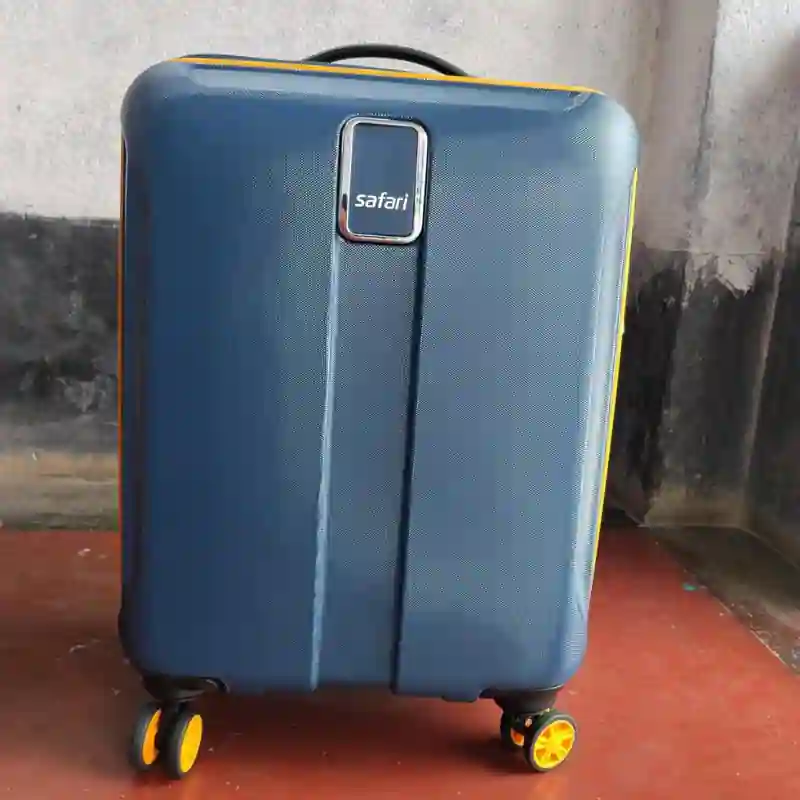
Bags in this category typically hold enough for a week of packing, plus some room for things picked up along the way.
For many travellers, 65cm is a practical middle ground — it covers a wide range of trips without falling short on any of them, though whether it’s genuinely the “right” size for you still depends on how you actually travel, which is why we started this guide with those four questions.
Once packed, bags this size get heavy — this is worth knowing before you’re standing on a platform figuring it out for the first time.
Whether it fits under a train berth or needs to go elsewhere depends on the coach type, the berth configuration, and the bag’s exact outside dimensions — there isn’t one universal answer, so it’s worth measuring your specific bag against your coach class if this matters to you (more on Indian Railways’ actual size rules below).
Buy this if: you take week-long trips, check bags in when you fly, or want one all-purpose bag that handles most trips.
Skip this if: most of your trips are short weekend runs — you’ll be carrying this bag half-empty much of the time.

75cm — for long trips, moving, or family travel
This is the largest common size, roughly 28 to 30 inches, suited to long vacations, relocating, or packing for more than one person in a single bag.
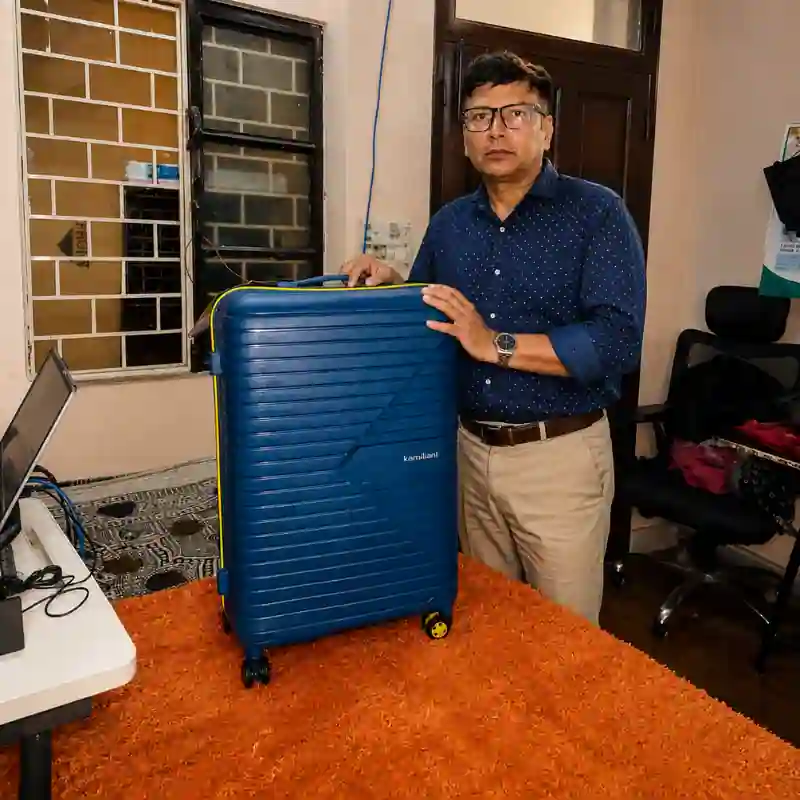
This size takes real effort to manage. It’s unlikely to fit under a train berth or on an overhead rack — Indian Railways’ own size limits for luggage in the passenger compartment (detailed below) rule this out in AC 3-Tier and Chair Car specifically, so plan for this in advance rather than at the platform. Lifting it into a car boot, especially a hatchback, usually needs two people once it’s fully packed.
On the flight side, the issue with this size isn’t the 75cm label directly — it’s that more packing space makes it easier to pack heavier, and airline checked-baggage allowances are based on weight as much as size.
Checked-baggage weight limits can be relatively low on some domestic economy fares, and they vary by airline, fare type, and route, so a 75cm bag containing a genuinely light load isn’t automatically a problem — a 75cm bag packed to its full capacity is simply more likely to run into whatever limit applies to your specific ticket.
Weigh your packed bag at home if you’re unsure, and check your airline’s current checked-baggage policy for your fare before you travel.
Buy this if: you travel for two weeks or longer, you’re relocating, or you’re packing for your whole family on a trip.
Skip this if: you usually travel alone — managing a bag this size by yourself on a crowded platform is genuinely difficult.

Trolley bag size on Indian trains — the actual rules
August 2026 update: Indian Railways now allows passengers with confirmed reserved tickets to book excess personal luggage online through IRCTC, making it easier to handle luggage that goes beyond the normal free allowance.
Size restrictions in the passenger compartment still apply, though, so a larger suitcase may still need to go through the applicable luggage or parcel process rather than travelling with you in your coach.
Indian Railways sets real, specific size limits for luggage carried in the passenger compartment, not just a general sense of “smaller is easier”:
- In Sleeper Class and General/Second Class, luggage up to 100 cm × 60 cm × 25 cm is allowed in the passenger compartment.
- In AC 3-Tier and AC Chair Car, the limit is smaller: 55 cm × 45 cm × 22.5 cm.
- Luggage exceeding these dimensions must be booked and carried separately in the brake van (also called the parcel van), for a small additional fee.
This means a 55cm bag may fit within the AC 3-Tier/Chair Car limit, but only if its complete outside dimensions — including wheels and any handle housing that sticks out — stay within 55 × 45 × 22.5 cm on all three sides, not just the height.
A bag marketed as “55cm” refers to one dimension; it can still be wider or deeper than this limit depending on the design, so check the full listed dimensions rather than the size label alone.
A 65cm bag may exceed the 45cm width or 22.5cm depth limit depending on its exact build, even though its “height” label is well under 55cm — this is exactly the kind of size-versus-dimensions gap we mentioned earlier.
A 75cm bag is very unlikely to meet the AC 3-Tier/Chair Car limit and should be assumed to need brake van booking in those classes.
Whether a bag fits under a specific berth or on a specific overhead rack also depends on the coach’s berth configuration and how full the coach already is — this isn’t something we can promise from a size label alone, so treat this as a general guide rather than a guarantee for your exact seat.
Beyond the passenger-compartment size limit, Indian Railways also sets free weight allowances by class — 40 kg free (80 kg maximum) in AC 3-Tier, Chair Car, and Sleeper Class, for example — with excess luggage chargeable and unbooked excess liable to a penalty.
If you’re travelling with more than typical vacation luggage, it’s worth checking the current Indian Railways luggage rules directly before your trip.
For specific bag recommendations built around train travel — including security tips and coach-friendly sizing — see our best trolley bags for Indian train travel guide.
Buses and cars
Bus boot space is often shared with other passengers’ bags, especially on state transport and hill routes, and there’s no standard size rule the way there is for trains or flights — it comes down to the specific bus and how much space is already taken. Smaller bags have an easier time here; a 75cm bag may not fit on some buses at all.
In a car, a 65cm bag is usually manageable in a hatchback boot if more than one person’s luggage is going in, though this depends on your specific car. Sedans and SUVs generally handle the 75cm size more comfortably.
So which size should you buy?
If you can only own one trolley bag, 65cm is a reasonable single choice for most general travel — it handles a week-long trip and is more manageable than the 75cm size, without being as limiting as the 55cm.
If you travel often enough to justify two bags, 55cm and 65cm together cover most situations — short trips with the smaller one, longer trips with the other, and both together for a longer family trip.
Add a 75cm bag only if you genuinely need the extra capacity often — for long trips, relocation, or family travel. For occasional use, borrowing or renting one is often more practical than owning a bag that sits unused most of the year.
Once you’ve settled on a size, budget is usually the next question. Most of the options mentioned in this guide fall well under ₹5,000 — if you want a wider set of choices across sizes and brands at this price point, see our guide to the best trolley bags under ₹5,000 in India.
For a real-world example of how these sizes translate into actual buying decisions, see our Uppercase vs American Tourister comparison, which prices out both brands at 55/56cm and 68cm.
Frequently asked questions
What size trolley bag is best for a week-long trip?
65cm is a practical middle ground for this length of trip — enough room for a week’s packing without becoming unwieldy.
Will a 55cm bag count as cabin baggage on Indian flights?
Often, but not automatically. IndiGo, SpiceJet, and Akasa currently require cabin bags within 55 × 35 × 25 cm and 7 kg. Air India’s limit is 55 × 40 × 20 cm and 7 kg for Economy. Check your specific airline’s current policy rather than assuming any 55cm bag qualifies everywhere.
Does a bigger suitcase mean it’s better built?
No. Size and build quality aren’t related. A well-built 55cm bag will typically outlast a poorly built 75cm one — judge quality by material, wheels, warranty, and reviews, not size.
Will my trolley bag fit under a train berth or on the overhead rack?
It depends on the bag’s full outside dimensions, your coach class, and the berth configuration — there’s no single universal answer. Indian Railways permits up to 55 × 45 × 22.5 cm in AC 3-Tier and Chair Car compartments, and up to 100 × 60 × 25 cm in Sleeper and General classes; luggage larger than these limits must be booked in the brake van.
Is it worth buying a 3-piece luggage set instead of individual sizes?
If you’ll genuinely use all three sizes over time, a set is often cheaper per bag than buying separately. If you only need one or two sizes, buying individually avoids paying for a size you won’t use.
How many years does a trolley bag typically last, regardless of size?
Size doesn’t significantly affect lifespan. What tends to wear out first — wheels, zips, the handle mechanism — depends more on material and build quality. See our material guide for more on that.
Can I check in a 55cm cabin-size bag instead of carrying it on board?
Yes, that’s not a problem. The size only becomes relevant if you’re specifically trying to avoid checking in.
Is a 55 cm trolley always cabin-approved?
No. A 55 cm trolley is not automatically cabin-approved. Airlines can have different limits for cabin baggage, and they may also consider the bag’s width, depth, and weight, not just its height. For example, a 55 cm trolley may fit one airline’s allowance but exceed another’s depth limit.
Before flying, check your airline’s current cabin-bag dimensions and weight limit rather than relying only on the 55 cm label.
Should I buy a 55 cm or 65 cm trolley?
It depends on how you travel. Choose a 55 cm trolley if you mostly take short trips and want something that may work as cabin luggage, subject to your airline’s size limits. Go for a 65 cm trolley if you usually travel for several days or need more packing space and don’t mind checking in your bag.
If you’re unsure, think about your typical trip length: 55 cm for lighter, shorter trips; 65 cm for more clothes and longer journeys.
Sources
- IndiGo, SpiceJet, and Akasa cabin baggage policies (verified against current published airline information, August 2026)
- Air India cabin and checked baggage policy (verified against current published airline information, August 2026)
- Indian Railways luggage rules — passenger compartment size limits and class-wise weight allowances (verified against current published sources, August 2026)
- IRCTC online excess luggage booking facility for confirmed-ticket passengers (introduced July 31, 2026)
Airline and railway policies change periodically — always confirm current rules directly with the airline or Indian Railways before travelling.
Once you’ve sorted out the size, it’s worth going through our full Trolley Bag Buying Guide before you actually buy.
Related BagInsider guides
- ABS vs Polycarbonate vs Polypropylene: material guide
- Hard-shell vs soft-sided luggage
- Best Trolley Bags Under ₹5000 in India (2026): 7 Smart Picks for Every Type of Traveller
- Best Trolley Bags for Train Travel in India: 7 Top Picks for 2026
About the author: Sunil Bhatt writes about luggage, travel gear, and practical packing decisions for Indian travellers on Bag Insider.
Research methodology: This guide compares manufacturer-listed dimensions, published airline baggage policies, Indian Railways luggage rules, and patterns in verified buyer reviews. Product specifications and prices are checked before publication, but individual products are not physically tested unless stated otherwise.
