

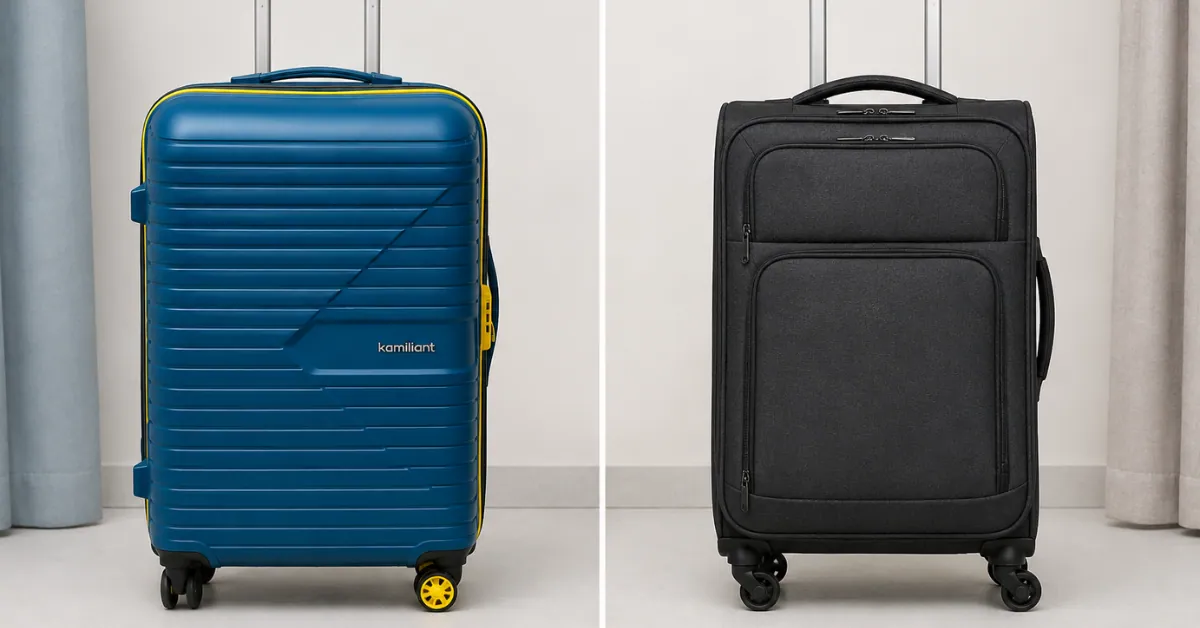
Hard-shell and soft-sided suitcases are the two most common types of trolley bags available today. At first, the choice looks simple, but the right one depends on how you travel.
A suitcase used mainly for flights doesn’t always work best for train journeys or road trips. Packing habits, weather, and the type of belongings you carry also make a difference.
A hard-shell suitcase offers better protection for fragile items, while a soft-sided suitcase gives you more packing flexibility and quick access through front pockets.
This guide compares both types to help you choose the right trolley bag for your travel needs in India.
Before you make this decision, if you’d like a full step-by-step checklist, our Trolley Bag Buying Guide is a good place to start.
Quick Answer
Here’s the short answer.
Choose a hard-shell suitcase if you travel frequently by air, carry fragile items, or want better protection from rain and rough baggage handling.
Choose a soft-sided suitcase if you mostly travel by train, bus, or car, need extra packing flexibility, or prefer front pockets for quick access to travel essentials.
Both types work well. The right choice depends on how you travel and what you usually carry.
Hard Shell vs Soft-Sided Suitcase Comparison
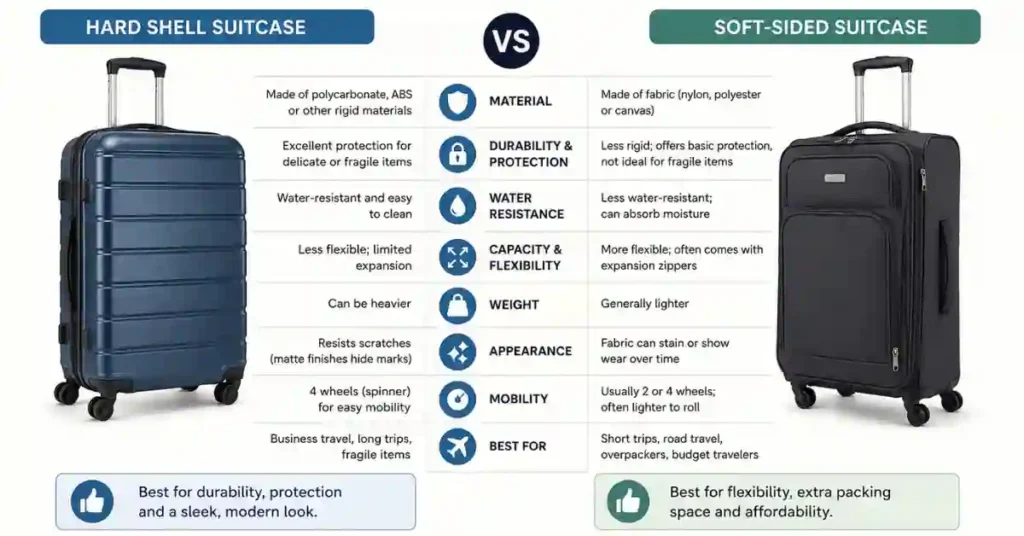
| Feature | Hard-Shell Suitcase | Soft-Sided Suitcase |
|---|---|---|
| Best For | Flights & fragile items | Train, bus & road trips |
| Protection | Excellent | Good |
| Packing Space | Fixed capacity | Flexible & often expandable |
| Water Resistance | Better | Good, but fabric can absorb water over time |
| Front Pockets | No | Yes |
| Weight | Lightweight to moderate* | Usually lightweight |
*Weight depends on the material. Polypropylene and polycarbonate suitcases are generally lighter than ABS models.
Still deciding? Check our Best Trolley Bags Under ₹5,000 in India guide for product recommendations across different budgets.
What Is a Hard-Shell Suitcase?
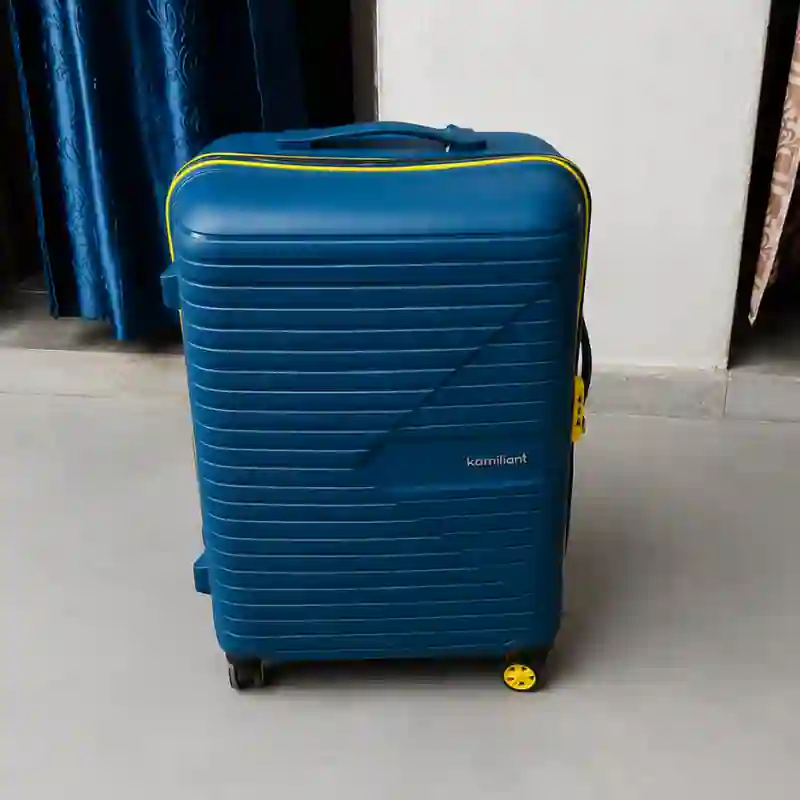
A hard-shell suitcase is made with a solid outer body instead of fabric. Most models use polycarbonate (PC), polypropylene (PP), or ABS plastic.
Each material offers a different balance of durability, weight, and price, but all provide better protection than a typical fabric suitcase.
A hard-shell suitcase provides better protection for laptops, cameras, perfume bottles, souvenirs, and other fragile belongings. It is also easier to clean and handles rain better than most fabric suitcases.
The type of material affects durability, weight, and price. Polycarbonate is strong and flexible, polypropylene is lightweight and highly durable, while ABS is usually the most affordable option.
Want to know which material is right for you? Read our detailed guide on ABS vs Polycarbonate vs Polypropylene Suitcases.
Pros
- Better protection for fragile items
- Good choice for air travel
- Handles rain better than fabric suitcases
- Easy to clean
- Modern look
Cons
- Packing space doesn’t stretch
- No front pockets on most models
- Scratches become visible over time
- Budget ABS suitcases are usually less durable than polycarbonate or polypropylene models
A hard-shell suitcase works well for:
- Monsoon travel
- Frequent flights
- Checked baggage
- Fragile belongings
What Is a Soft-Sided Suitcase?
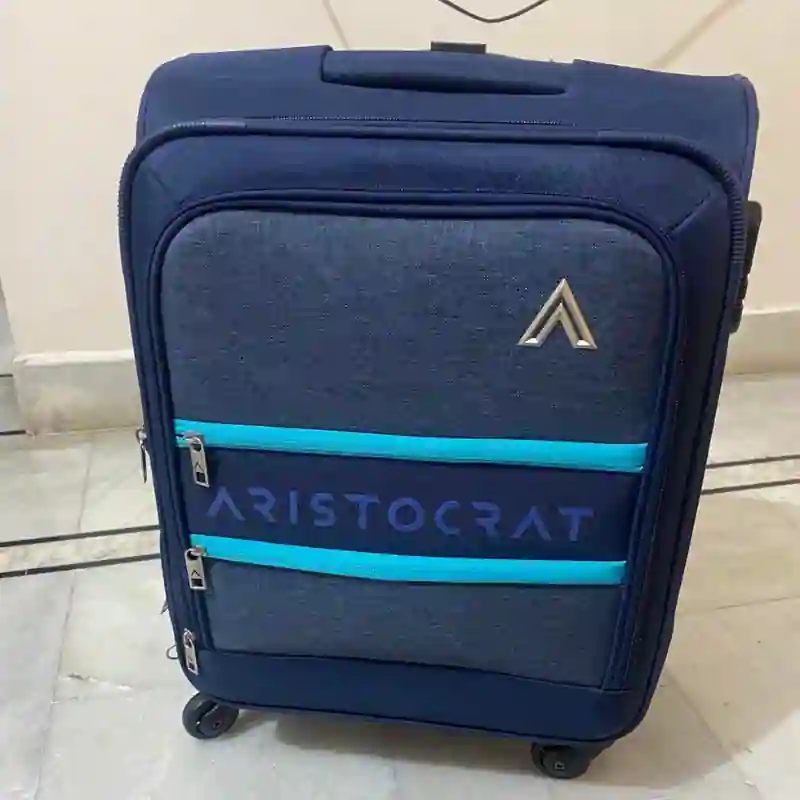
A soft-sided suitcase has a fabric outer layer, usually made from polyester or nylon. Instead of a solid shell, the fabric gives the suitcase a little flexibility, making it easier to pack extra clothes or souvenirs when more space is needed.
Most soft-sided suitcases also include front zip pockets. They make it easier to reach your passport, charger, wallet, travel documents, or other essentials without opening the main compartment.
The trade-off is protection. A soft-sided suitcase doesn’t protect fragile items as well as a hard-shell suitcase.
Most premium models use water-resistant fabric, but they are not completely waterproof during heavy rain.
Why You’ll Like It
- More flexible packing space
- Front pockets for quick access
- Expandable options are widely available
- Everyday scratches are less noticeable
- Well suited for train and road travel
Before You Buy
- Doesn’t protect fragile items as well as a hard-shell suitcase
- Fabric can tear if damaged by a sharp object
- Heavy rain can soak the outer fabric over time
- Overpacking may cause the suitcase to lose its shape
Best For
- Family holidays
- Train journeys
- Road trips
- Weekend travel
- Extra packing space
Read our- Trolley Bag Size Guide: 55cm vs 65cm vs 75cm — choose the right size for your next trip.
Hard Shell vs Soft-Sided Suitcase: What’s the Difference?
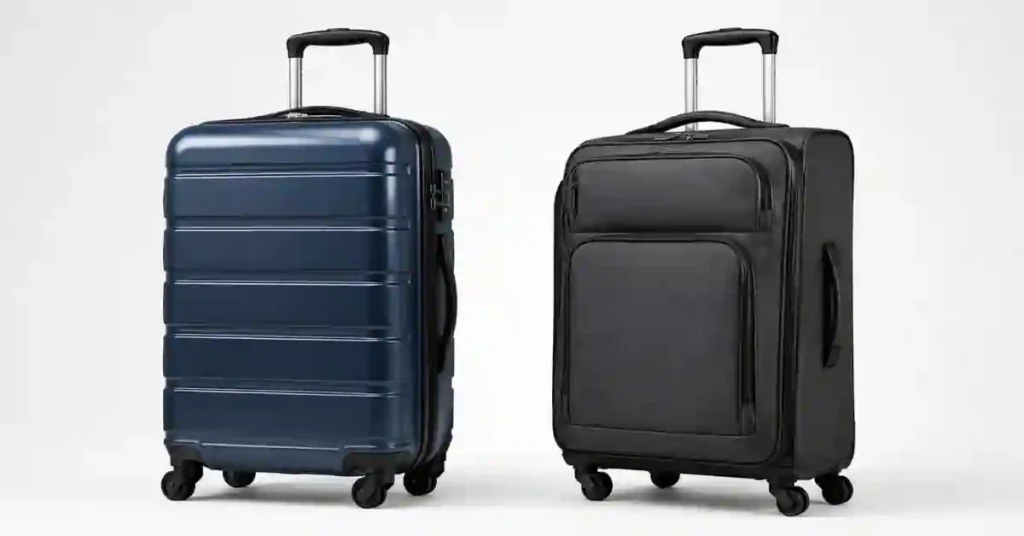
Which One Protects Your Belongings Better?
If your suitcase is going in the aircraft’s cargo hold, a hard-shell suitcase is the safer option.
Airport baggage is rarely handled gently. Bags are stacked, pushed along conveyor belts, and sometimes end up under heavier luggage. A hard shell helps protect laptops, cameras, perfume bottles, souvenirs, and other fragile items from everyday knocks.
A soft-sided suitcase works perfectly well for clothes, shoes, and other everyday essentials. If you don’t usually carry anything fragile, the extra protection may not be something you’ll notice.
Which One Gives You More Packing Space?
A soft-sided suitcase gives you a little more flexibility.
Need to fit in one more jacket? Bringing home gifts or shopping? The fabric has some give, and many models include an expandable zip for those occasions.
A hard-shell suitcase keeps the same shape, so once it’s full, there’s very little room for anything extra.
Which One Handles Rain Better?
A sudden shower can happen on any trip, especially during the monsoon.
A hard-shell suitcase doesn’t absorb water, so cleaning it is usually as simple as wiping it with a cloth.
A soft-sided suitcase can handle light rain, but the fabric may become damp after long exposure to heavy rainfall.
Which One Is More Convenient?
A soft-sided suitcase makes everyday travel a little easier.
Many models include front zip pockets for a passport, charger, power bank, medicines, travel documents, or a light jacket. You can grab what you need without opening the main compartment.
Most hard-shell suitcases don’t have external pockets, so everything stays inside until you unzip the suitcase.
Which One Lasts Longer?
A suitcase doesn’t wear out because it’s hard or soft.
The wheels, trolley handle, zips, corner guards, and stitching usually show signs of wear long before the main body does.
A well-made suitcase from a trusted brand can last for years, whether it’s hard-shell or soft-sided. Build quality matters far more than the outer material alone.
Which One Gives Better Value?
The better choice depends on how you travel.
If you fly regularly, paying a little more for a hard-shell suitcase can be worthwhile because of the added protection.
If most of your trips are by train, bus, or car, a soft-sided suitcase offers flexible packing space, useful front pockets, and is often available at a lower price.
A suitcase that matches your travel style is usually a better buy than the cheapest one on the shelf.
If you’re specifically travelling by train in India, hard-shell durability matters even more — see our best trolley bags for Indian train travel guide for train-specific picks and security tips.
Who Should Buy a Hard-Shell Suitcase?
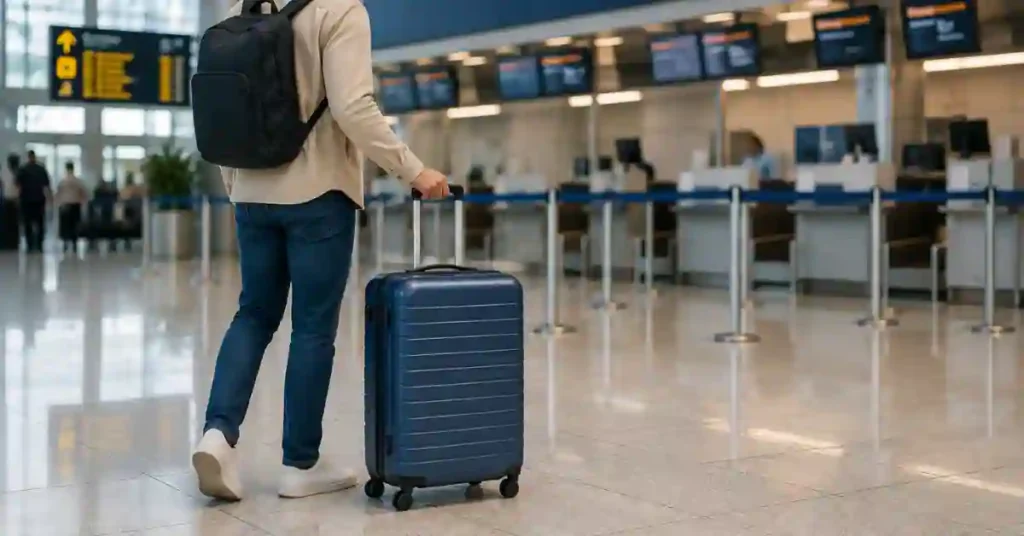
Choose a hard-shell suitcase if protecting your belongings is your priority. It offers better protection for laptops, cameras, perfume bottles, watches, souvenirs, and other fragile belongings.
It also handles rain better because the outer surface doesn’t absorb water. A quick wipe is usually enough before storing it or taking it indoors.
Best suited for:
- Checked baggage
- Fragile or expensive belongings
- Business travel
- Monsoon travel
- Travellers who prefer a structured suitcase
Who Should Buy a Soft-Sided Suitcase?
Choose a soft-sided suitcase if packing flexibility matters more than maximum protection. The fabric gives a little extra room, making it easier to fit bulky clothes or shopping before the return journey.
Front zip pockets keep passports, chargers, medicines, travel documents, and other essentials within easy reach without opening the main compartment.
Best suited for:
- Train journeys
- Bus travel
- Road trips
- Family holidays
- Extra packing space
- Front pocket storage
Final Verdict: Hard Shell or Soft-Sided Suitcase?
Both types are designed for different travel needs.
A hard-shell suitcase offers better protection for fragile belongings and performs better in wet conditions. A soft-sided suitcase gives you more packing flexibility and keeps frequently used items within easy reach.
Choose the suitcase that matches the way you travel, not the one with the longest feature list.
Ready to buy? Explore our picks for the Best Trolley Bags Under ₹5,000 in India.
Choose a hard-shell suitcase if protection matters most.
Both Uppercase and American Tourister lean heavily into hard-shell polycarbonate and polypropylene builds — our Uppercase vs American Tourister comparison looks at how that plays out between two of India’s most-searched brands.

 View Price on Amazon

As an Amazon Associate, Bag Insider earns from qualifying purchases.
Choose a soft-sided suitcase if packing space and convenience matter more.


As an Amazon Associate, Bag Insider earns from qualifying purchases.
If you’re buying your first trolley bag, a polycarbonate hard-shell suitcase is usually the better long-term investment because it offers a good balance of durability, protection, and weather resistance.
Frequently Asked Questions
Is a hard-shell suitcase better than a soft-sided suitcase?
A hard-shell suitcase is better for protection. A soft-sided suitcase is better for flexible packing and easy access to travel essentials.
Which suitcase is better for flights?
A hard-shell suitcase is a better option if you’re checking in your trolley bag. It offers more protection for laptops, cameras, perfume bottles, and other fragile belongings. If you’re carrying only clothes and everyday essentials, a soft-sided suitcase also works well.
Which suitcase is better for train travel in India?
A soft-sided suitcase is a common choice for train travel because the fabric body has a little flexibility when packing. Front zip pockets also make it easier to keep tickets, chargers, medicines, and other essentials within reach.
Do hard-shell suitcases crack easily?
It depends on the material. Polycarbonate and polypropylene are more resistant to impacts than ABS, which is commonly used in budget trolley bags. A well-made polycarbonate or polypropylene suitcase is less likely to crack during normal travel.
Are soft-sided suitcases waterproof?
No. Most soft-sided trolley bags are made from water-resistant fabric, not waterproof material. They can handle light rain, but the fabric may become wet after long exposure to heavy rainfall.
Hard shell or soft suitcase – which is better for India?
For India’s rain and rough handling, hard-shell offers superior protection and water resistance. Soft-sided suits if you need extra flexibility/expandable space and lighter weight. Choice depends on travel mode (flights vs trains) and baggage needs.
Can soft luggage handle Indian monsoon?
Most fabric suitcases are only water-resistant (not fully waterproof). In heavy rain, water can seep through zippers and seams. If you travel in monsoon, hard-shells or waterproof covers are safer.
What luggage size works for Indian trains?
Compact, soft-sided trolley (40–55 cm) often fits better under train berths. Hard suitcases take more space and can be hard to maneuver on crowded platforms.
Are lightweight hardside bags (polycarbonate) available in India?
Yes, polycarbonate hard-shells are lighter than older ABS models. Many brands (Samsonite, VIP Liftoff+, Kamiliant) offer lightweight hardshell carry-ons (~3 kg). Check product specs for “lightweight” models.
Which brands offer good warranty?
Indian brands like Skybags advertise up to 5-year warranties on select luggage. Samsonite, VIP and American Tourister also offer 2–3 year warranties on most models. Warranty indicates confidence in durability.
Relate Read –
