

Sunil Bhatt writes about travel gear and luggage for BagInsider, helping Indian readers choose the right suitcase for how they actually travel. This guide is based on published material specifications, brand track records, and patterns across verified buyer reviews — not hands-on lab testing of every model listed.
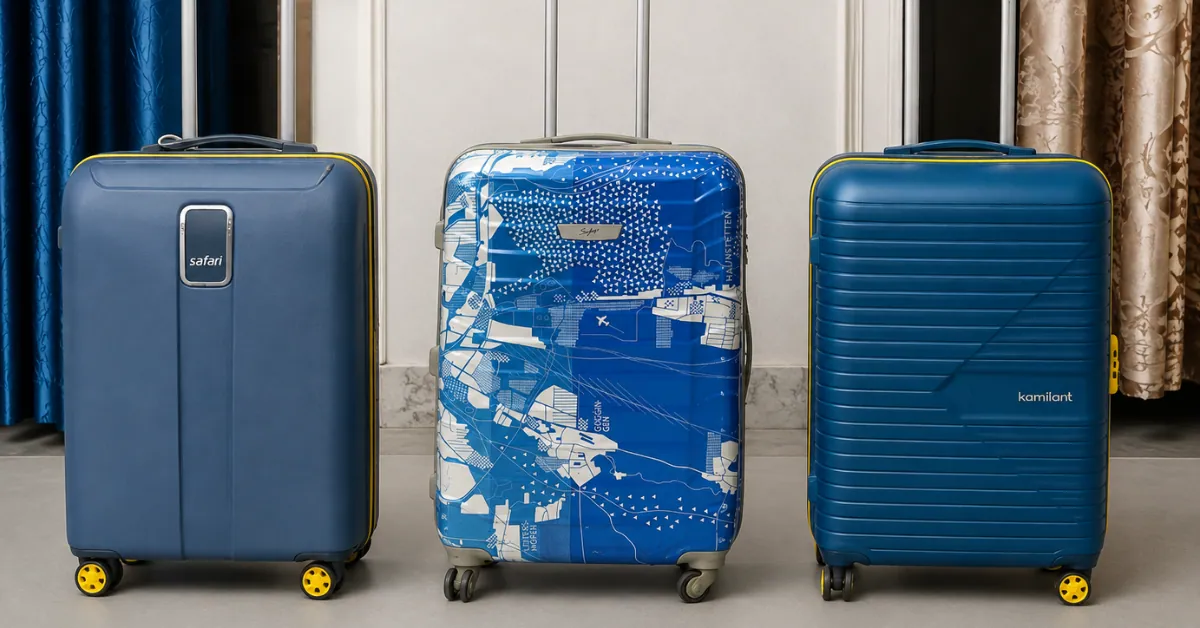
You’re ready to buy a hard-shell trolley bag. Then you notice something you weren’t expecting. One suitcase is made from ABS. Another is Polycarbonate. A third is Polypropylene.
At first, it seems like a simple choice. Then you start reading reviews, watching YouTube videos, and browsing travel forums. That’s when the confusion starts.
Some buyers avoid ABS because they believe it cracks easily. Others say polycarbonate is the only material worth paying extra for. Many travellers recommend polypropylene for its flexibility, while others say they’ve used the same ABS suitcase for years without any problems.
You’ll even find people who say their polycarbonate suitcase cracked after only a few trips. No wonder choosing the right material feels harder than choosing the trolley bag itself.
This guide assumes you’ve already decided on a hard-shell suitcase. If you’re still weighing hard-shell vs soft-shell, read our hard vs soft luggage guide first.
How we compared these materials: We compared ABS, polycarbonate, and polypropylene on shell weight, impact resistance, flexibility, typical Indian pricing, warranty terms, and how each material fits different travel patterns.
For the product picks below, we checked published specifications, brand track record, and patterns across verified buyer reviews — rather than choosing bags simply because they’re popular.
Once the material part is clear, if you want to go through the whole buying process step by step, our complete trolley bag buying guide will be useful.
Quick Answer
If you just want to know which material to buy, here’s a simple recommendation.
- Choose ABS if you’re looking for an affordable trolley bag and travel only a few times a year.
- Choose Polycarbonate if you fly regularly or carry items that need better protection during transit.
- Choose Polypropylene if you want a suitcase that’s lightweight, durable, and built for frequent travel.
Each material has its own strengths. The right choice depends on how you travel, what you usually pack, and how much you want to spend.
ABS vs Polycarbonate vs Polypropylene: Side-by-Side Comparison
| What matters | ABS | Polycarbonate | Polypropylene |
|---|---|---|---|
| Price (India) | Lowest — ₹2,000–₹4,000 | Higher — ₹3,500–₹8,000 | Higher — ₹4,000–₹10,000+ |
| Weight | Moderate | Moderate to light | Usually lightest |
| Flexibility | Low — more rigid | High — flexes on impact | High — flexes on impact |
| Impact resistance | Good for normal use | Very good | Very good |
| Scratch visibility | Shows scratches more easily | Better than ABS | Better than ABS |
| Best suited to | Occasional travel | Regular flights, checked baggage | Frequent travel, strict weight limits |
Prices vary by brand, suitcase size, and features such as expandability, TSA locks, wheel quality, and warranty. These are general material characteristics based on published specs and typical buyer feedback, not lab-tested scores for any single product.
What Is an ABS Suitcase?
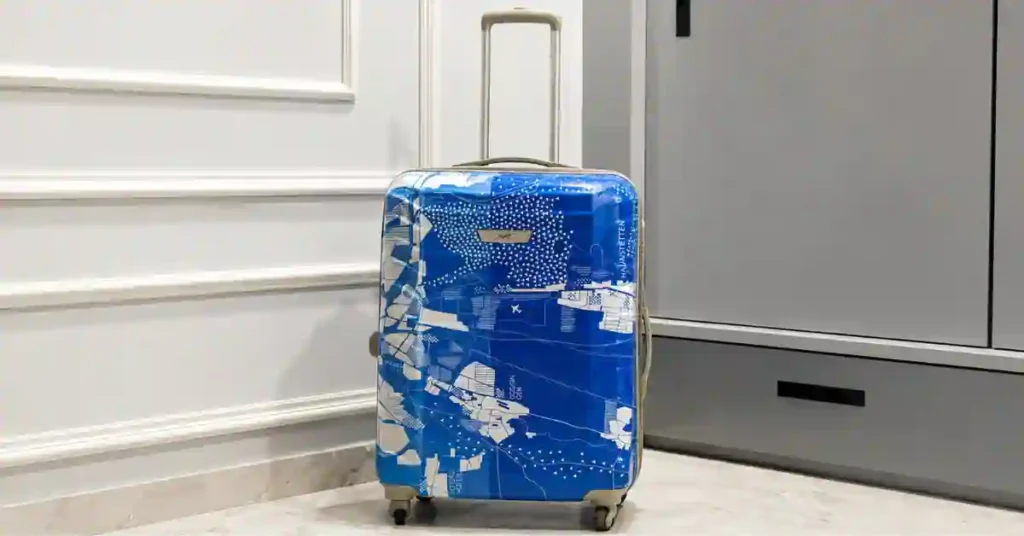
An ABS suitcase is a hard-shell trolley bag made from ABS (Acrylonitrile Butadiene Styrene), a plastic that’s widely used in budget luggage.
If you’ve been looking at trolley bags under ₹4,000, you’ve probably seen plenty of ABS models. It’s one of the main reasons these suitcases cost less than polycarbonate or polypropylene options.
Price, however, doesn’t tell the whole story. A well-made ABS trolley bag from a trusted brand can easily handle occasional trips, whether you’re flying, taking the train, or heading out on a road trip. What usually matters more is the overall build quality — strong wheels, a sturdy trolley handle, good zippers, and a well-built shell.
If you travel only a few times a year and don’t want to spend extra on features you may never need, an ABS suitcase is often a practical choice.
Why buyers choose ABS:
- More affordable than polycarbonate and polypropylene
- Lightweight and easy to carry
- Better protection than a fabric suitcase
- Available in almost every luggage size
- Easy to find across most luggage brands in India
Things to keep in mind:
- Less flexible than polycarbonate and polypropylene
- Can crack if it takes a very hard impact
- Scratches are more noticeable over time
- Not the best option if you fly very frequently
Best for: occasional travellers who mostly pack clothes and everyday essentials, and need a suitcase for holidays, train journeys, or the odd flight.
Popular ABS picks on Amazon.in:
- Skybags Trooper ABS Hard Luggage — Best for occasional travel. Budget-friendly, scratch-resistant ABS shell with 8 spinner wheels and a 5-year warranty; a solid pick if your suitcase comes out only a few times a year.
- Skybags Cabin Trooper 55cm — Best for weekend/cabin trips. Compact cabin-size ABS option that stays with you as carry-on, so it avoids most of the rough handling checked bags face.
Looking for specific options in this price range? Check out our full guide to the best trolley bags under ₹5,000.
Do You Really Need a Polypropylene Trolley Bag?
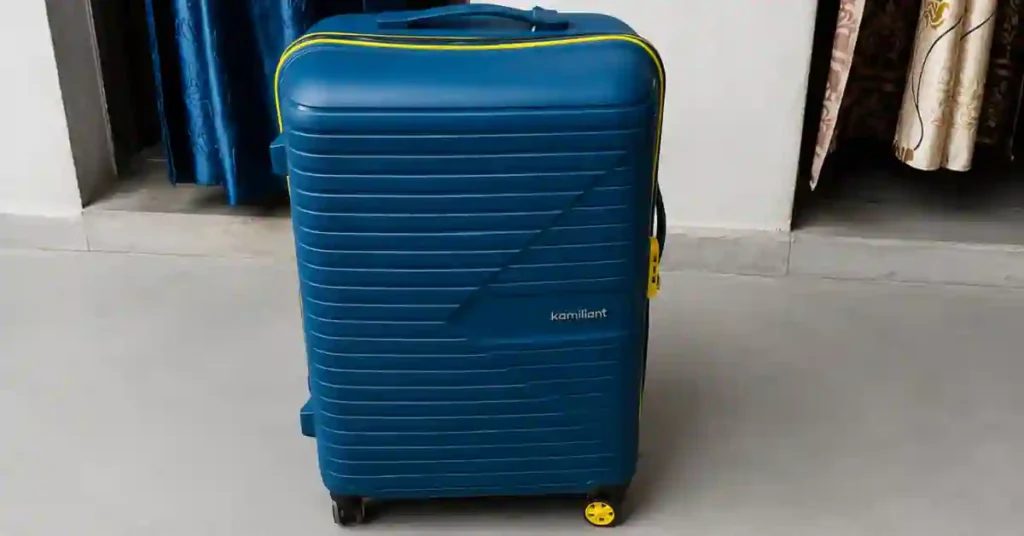
If you ask someone who travels a lot, there’s a good chance they’ll recommend polypropylene (PP). The reason is simple — these trolley bags are built for regular use.
Think about everything a suitcase goes through during a trip in India. It’s pulled across broken pavements and gravel outside stations, lifted into taxi and auto boots, pushed onto crowded railway luggage racks, checked in at airports, and dragged through hotel lobbies.
A polypropylene suitcase handles that kind of routine better than most budget ABS bags.
Does that mean everyone should buy one? No. If your suitcase comes out only once or twice a year for a family holiday, you may never notice enough difference to justify spending more.
That’s why polypropylene makes the most sense for people who travel regularly, not just people with a bigger budget.
Buy a polypropylene trolley bag if:
- You travel several times a year
- Your suitcase is checked in on flights regularly
- You’d rather buy one good suitcase than replace a cheaper one every few years
You can skip it if:
- You travel only occasionally
- Most of your trips are by train, bus, or car
- A good-quality ABS suitcase already fits your budget and travel needs
Popular Polypropylene picks on Amazon.in:
- Safari Pentagon Pro 8 — Best PP option when weight matters. One of the best-reviewed PP luggage sets in India, with 8 spinner wheels and 360° wheeling; useful if you fly budget airlines with tight weight limits.
- Aristocrat Airpro Max Polypropylene Trolley — Best for frequent flyers on a mid-range budget. Lightweight, sporty design with Combination Lock, good for people who check in bags often but don’t want to pay polycarbonate prices.
Should You Pay More for a Polycarbonate Trolley Bag?
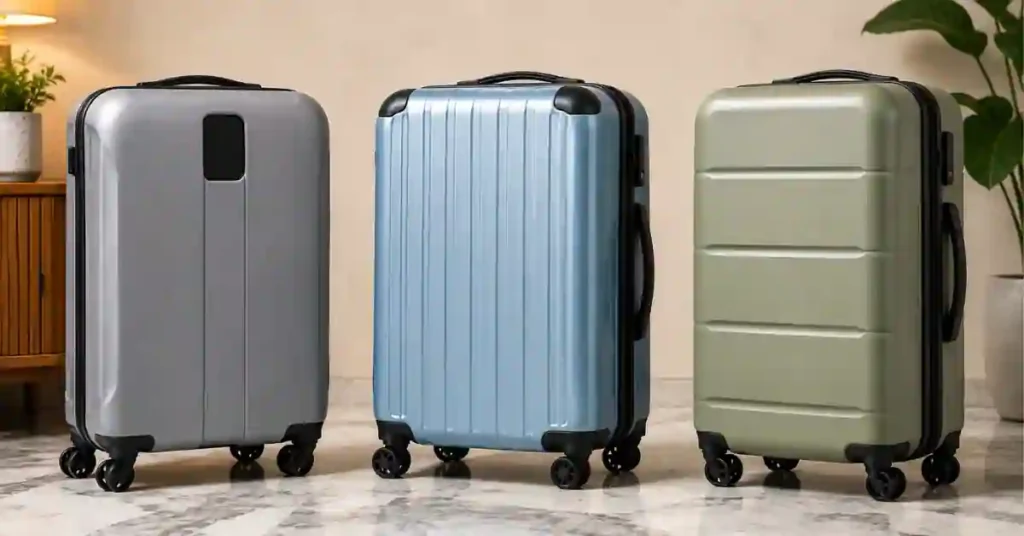
You’re looking at two trolley bags. They look almost the same. One costs around ₹3,000. The other is closer to ₹5,000. The reason for the higher price is usually one word on the tag — Polycarbonate.
So before spending the extra money, ask yourself one question: will you actually benefit from it?
If you fly regularly, the answer is often yes. Every checked suitcase goes through rough handling — it rolls along conveyor belts, gets stacked under heavier bags, and is loaded into baggage carts before it reaches you. That’s where a good polycarbonate trolley bag usually outperforms most ABS bags.
But here’s what many buyers don’t realise: the material alone doesn’t make a suitcase better. Two trolley bags can both say “100% Polycarbonate,” yet one lasts for years while the other starts giving trouble after only a few trips.
That’s because the shell is only one part of the suitcase. Weak wheels, a shaky trolley handle, poor-quality zippers, or bad overall construction can ruin the experience, no matter what material is printed on the label.
Spend more on a polycarbonate trolley bag if:
- You fly several times a year
- Your luggage is usually checked in
- You carry electronics, gifts, or other fragile items
- You’re buying one suitcase that you plan to use for years
Save your money if:
- You travel only once or twice a year
- Most of your trips are by train, bus, or car
- You’re choosing between a trusted ABS suitcase and a budget polycarbonate one
A well-built ABS trolley bag from a reliable brand is often a better purchase than a poorly built polycarbonate trolley bag.
Popular Polycarbonate picks on Amazon.in:
- Safari Thorium Neo Polycarbonate — Best PC option for regular flyers. Well-reviewed all-rounder with 8 wheels and 360° wheeling, built for suitcases that get checked in often.
- uppercase JFK Hard sided Check-in Trolley Bag— Best for international travel. Premium build with TSA lock and an organized interior, suited to longer trips where you’re carrying more valuable or fragile items.
Uppercase and American Tourister are a good real-world case study of this material trade-off — one leans almost entirely polycarbonate, the other splits its range between polypropylene and polycarbonate. Our Uppercase vs American Tourister comparison breaks down what that means for price and durability.
What Should You Check Before Buying?
Choosing the shell material is only half the job. A trolley bag can have a good ABS, Polycarbonate, or Polypropylene shell and still disappoint you if the wheels are poor or the handle starts becoming loose after a few trips.
Before buying, check these five things:
1. Check the weight. This matters more than many buyers realise, especially when flying. A heavy suitcase uses up part of your baggage allowance before you’ve packed anything. Polypropylene models tend to be lighter, while ABS and polycarbonate options add more weight depending on size.
2. Look at the wheels. Don’t judge wheels by the word “spinner” alone. Check recent buyer reviews for complaints about wheels getting stuck, becoming noisy, wobbling, coming off, or struggling to roll when the bag is fully packed. You’ll use the wheels every time you travel, so this is one area where spending a little more can make sense.
3. Check the trolley handle. Pull the handle up fully and move it side to side. A small amount of movement is normal — but if it feels loose or shaky when the bag is empty, don’t expect it to feel better once you’ve packed 15–20 kg into it.
4. Check the zipper and lock. Open and close the zipper a few times; it should move smoothly. Also check what type of lock the bag has and whether the warranty covers the lock, zip, or other hardware.
5. Read the warranty properly. Don’t look only at the number of years. Check what the company actually covers and how you’re supposed to claim it. A five-year warranty is only useful if the brand provides proper after-sales support when something goes wrong.
ABS vs Polycarbonate vs Polypropylene: Which Is Better for Flights?
This is the practical question most buyers actually have. It depends on how the bag will be handled, not just how often you fly.
- Occasional cabin travel — if your suitcase mostly stays with you as carry-on and rarely goes into the cargo hold, ABS is usually enough. It’s not being thrown around baggage carts and conveyor belts.
- Regular checked baggage — if you check in your suitcase on most flights, polycarbonate or polypropylene make more sense. Both flex on impact instead of cracking, which matters when your bag is stacked, dropped, or handled roughly.
- Strict baggage weight limits — if you fly budget airlines with tight weight allowances, polypropylene has the edge. A lighter empty suitcase means more of your allowance goes to what you’re actually packing.
Which Trolley Bag Material Makes Sense for You?
There isn’t one material that everyone should buy. Your travel pattern makes the decision much easier.
If you travel once or twice a year — ABS is enough. If most of your trips are holidays, family visits, or occasional work travel, there’s little reason to spend a lot more on the shell.
If you fly regularly — Polycarbonate makes more sense. You get better impact resistance than ABS, which matters when the suitcase is checked in repeatedly.
If you travel very frequently — Polypropylene is worth considering. It’s lighter, and the shell flexes when it takes a hit, which is useful for people who travel often and don’t want to carry unnecessary weight.
For a deeper look at picking the right bag specifically for train travel — including security and coach-specific sizing — see our best trolley bags for Indian train travel guide.
Bottom Line
If you came here because you simply wanted to know which trolley bag material you should buy, this is the short answer:
- For occasional travel and a lower budget → ABS
- For regular flights and better impact protection → Polycarbonate
- For frequent travel and lower weight → Polypropylene
Don’t spend extra money just because a suitcase has a more expensive material printed on the box. Look at the whole bag: check the weight, the wheels, the handle, the zipper, and the warranty — then look at the price.
That’s a better way to choose a trolley bag than deciding only by ABS vs Polycarbonate vs Polypropylene.
Frequently Asked Questions
Is ABS good for a trolley bag?
Yes, if you don’t travel very often and want to keep the price under control. ABS can handle normal travel, but it’s more prone to scratches and cracking than polycarbonate or polypropylene.
Which trolley bag material is the lightest?
Polypropylene is generally the lightest of the three. That can be useful on flights, since the suitcase itself takes up less of your baggage allowance.
Does a heavier suitcase mean better quality?
Not necessarily. A heavier shell is often just thicker plastic, not better plastic — and on a flight, that extra weight eats into your baggage allowance before you’ve packed anything. Wheel quality, handle strength, and zipper construction affect how a suitcase actually performs far more than raw weight does. Some of the sturdiest polypropylene bags on the market are also the lightest.
The listing says “polycarbonate” — how do I know it’s genuine and not a blend?
Read the full product description, not just the title. Many budget suitcases are marketed as “polycarbonate” but are actually ABS/PC blends, which are heavier on ABS and cheaper to make. Look for the shell material listed clearly in the specifications section, check buyer photos and reviews for mentions of flex or cracking, and be cautious if a “100% polycarbonate” suitcase is priced close to typical ABS pricing (under ₹3,500) — that’s usually a sign it’s a blend.
Which material is best for students travelling abroad for studies?
Polypropylene or polycarbonate, depending on budget. Students usually check in one or two large suitcases packed heavier than normal, and the bags get handled roughly across multiple flights and transfers. Polypropylene keeps the empty weight low, which matters when you’re already packing close to the airline’s limit. If budget allows, polycarbonate’s impact resistance is worth it for a suitcase you’ll be using for years of travel back and forth.
How many years does a suitcase actually last, by material?
With normal use and decent build quality, ABS suitcases typically last 2–4 years before scratches, cracks, or hardware issues show up. Polypropylene and polycarbonate suitcases, used the same way, often last 5–8 years or longer, since the shell resists cracking and the material holds up better to repeated flexing. Actual lifespan depends more on wheel and zipper quality than on the shell material alone.
Can a cracked ABS or polycarbonate suitcase be repaired?
Small cracks and chips can sometimes be fixed with plastic epoxy or a luggage repair service, but a full crack across the shell usually can’t be reliably repaired for regular travel use. Wheels, handles, and zippers — the parts most likely to fail first — are repairable or replaceable in most cases, often through the brand’s warranty service. This is one more reason to check what a suitcase’s warranty actually covers before buying, not just the number of years.
What’s the difference between polycarbonate, polypropylene, and ABS luggage?
Polycarbonate is generally the tougher, more premium option; polypropylene is lighter and more flexible; ABS is usually the budget choice. For most Indian buyers, the right material depends on how often you travel and how much you want to spend.
Is polypropylene good for a trolley bag?
Yes. Polypropylene (PP) is a good material for trolley bags, especially if you want something lightweight and flexible. It can handle everyday travel well and is less likely to crack from minor impacts than some more rigid plastics.
The downside is that PP can feel less premium than polycarbonate, and cheaper PP bags may have weaker wheels, handles, or zippers. For a trolley around ₹2,000, PP can be a sensible choice if the overall build quality is good.
Is polycarbonate better than polypropylene?
Not always. Polycarbonate (PC) is generally more rigid and impact-resistant, while polypropylene (PP) is usually lighter and more flexible. For frequent travel or checked luggage, PC can be a good choice if you want a more solid, premium-feeling shell. For budget travel, PP often offers better value.
So, if you’re choosing between the two, PC for a tougher, more rigid shell; PP for lower weight and better value.
What is more important: wheels or shell material?
Honestly, both matter, but I’d pay a little more attention to the wheels. A good shell protects your stuff, but if the wheels are stiff, noisy, or start wobbling, you’ll notice it every time you use the bag.
If you’re choosing between two similar trolley bags, go with the one that has better wheels and a sturdier overall build. The shell material matters too, but it shouldn’t be the only thing you look at.
Relate Read
